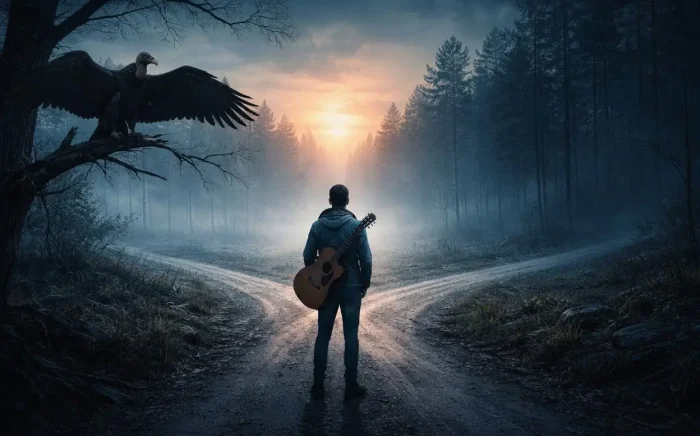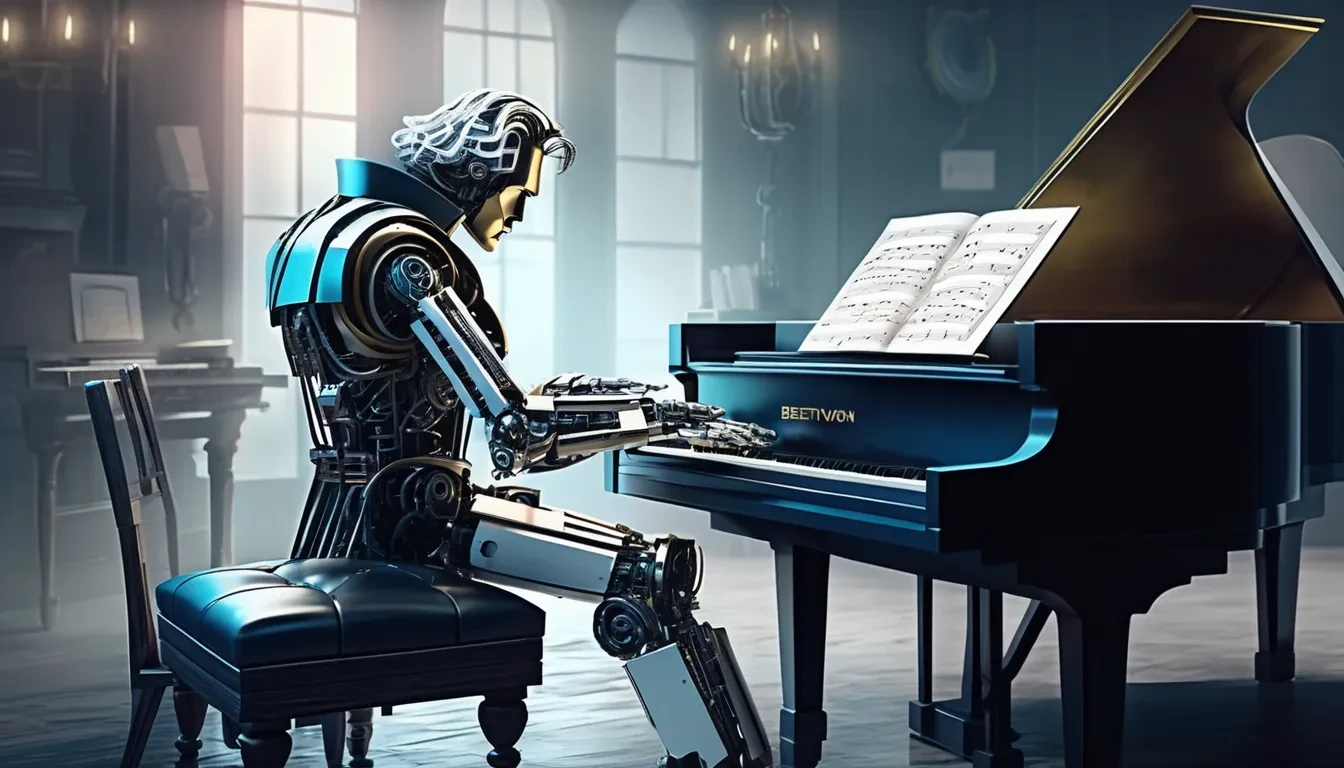
The music industry is at a crossroads, and as in the legend of bluesman Robert Johnson, the deal is to sell or not to sell one’s «soul».
The unsurprising «Devil» in our story is Artificial Intelligence. The music industry is, and will be, one of the industries that will be most impacted by AI, and by Generative AI, in particular. This is certain not the only form of AI that will affect the industry, but has created more panic among music business people than an average Ozzy Osbourne album provoked within the «Parents Music Resource Center» in the 1990s!
Generative AI Generating Disharmony
In particular, the advent of Gen-AI operators like Suno AI and Udio AI, both sued by the major labels for letting users generate «songs» from an AI service that has been trained on copyrighted material created a lot of disruption and controversy.
I think it’s a fair assumption that the major entertainment companies do want in on the action, but with a clear legal ownership definition acknowledging historical works. Today you cannot create a song with a song from Gen-AI and claim ownership, and this is not what artists should worry about.
The nightmare scenario is when the average consumer is content to create her own «soundtrack» from prompts, ignoring «flesh and bone artists», and the entertainment companies collect the royalties as they either offer their own services or they get a cut from other Gen-AI services due to their historical ownership of copyrighted material.
Innovation and technology do not simply «impose» new praxis and new perspective, but operate within socio-cultural reality. I have made the argument that, for instance, the use of auto-tune is a practice that has already somewhat distorted the perspective of what constitutes «real» music, before Generative AI was unleashed. If listeners are exclusively exposed to the sanitized voices post auto-tune accepting 100% artificial voices is not such a stretch.
«Normalizing» Expression
It’s also a fact that «hit songs» have become much simpler and more standardized; songs have fewer chords, fewer parts and key changes are almost «extinct» in popular music. The «machinic» trend also translates to instrumentalists and producers.
Today’s Digital Audio Workstations (DAW), with or without AI, allow users to put sounds perfectly «on the grid», pitches and rhythms. You don’t hear a song speed up or someone not hitting each note «perfectly».
As a guitarist I definitely notice a trend of machine-like precision in today’s guitar heroes. I’m not referring to technical proficiency, but the instrumentalists’ style. Often solos sound like video game music with very little variation in the phrasing and dynamics.
There is a certain irony in this hunt for technical perfection when «the human factor», the slightly out-of-tune bended guitar-note, or the singer being slightly sharp on the pitch etc., is exactly what connects with other….humans. Or, are listeners being «sanitized» in this sonic grid-tyranny?
So, technology (not just AI), and its application, is challenging the notion of human expression and creativity.
What is Creativity?
First note, how do we define creativity? According to the Cambridge Dictionary it is «the ability to produce or use original and unusual ideas.» For our purposes, esp. in the context of the «AI challenge», we need to dig a little deeper.
Let’s define Creativity as an interconnected, transformational act of possibility.
“Philosophy, art, and science are not the mental objects of an objectified brain but the three aspects under which the brain becomes subject.”
— Gilles Deleuze & Félix Guattari, «What Is Philosophy?»
This «brain becoming subject» alludes to an idea that «I think, therefore I am» (R.Descartes) is a fallacy. The «I» as well as the «Brain» and «Art», is under constant becoming, and creativity is viewed as a mode of engagement with the world that invents «new possibilities of life» – Gilles Deleuze, «Negotiations».
Besides the concept of «Becoming» (the transformative aspect of existence), I want to play with a few of other ideas from this French duo, Deleuze & Guattari.
Five Attributes of Creativity
1. «Difference and Repetition». Creativity arises from “difference,” not from sameness. It’s about variations, deviations, and the constant modulation of existing elements. “Repetition” isn’t about identical copies, but about the repetition of difference, where each iteration brings something new.
2. «The Rhizome.» It’s a non-hierarchical, interconnected network with multiple entry and exit points. Creativity, like the rhizome, is about making connections, forging new pathways, and breaking free from linear, hierarchical structures.
3. «Deterritorialization,»: the process of breaking free from established territories, codes, and habits. It’s about venturing into the unknown and challenging existing norms.
4. «The Event»: is a crucial aspect of creativity. It’s a rupture, a moment of intensity that disrupts the ordinary flow of things. Creative acts can be seen as the production of events, the creation of moments of transformative potential.
5. «The Assemblages»: are collections of heterogeneous elements that come together to form a working whole. They can be material, social, or conceptual.
The dynamics of breaking free from the established, and creating new events and paths of flight. Creativity is a process, interconnected, never fixed but a flow, has transformative potential and never a repetition of the same.
Seen from this angle, the concept of creativity creates a paradox or two in relation to Artificial Intelligence.
The Creativity Paradox
To explore the paradoxical relationship of humans vs. AI creativity, we’ll look at the concept of creativity from yet another angle the Torrance Test of Creative Thinking (TTCT). This is a test that identifies four component indicators of creative thinking Fluency, Flexibility, Originality, Elaboration.
Subjects are tested in the total number of interpretable, meaningful, and relevant ideas generated in response to a stimulus (Fluency), the number of different categories of relevant responses (Flexibility), the statistical rarity of the responses (Originality) and the amount of detail in the responses (Elaboration).
Large Language Models (LLM), like OpenAI, have been exposed to the test and generally score in the top 1%, more or less, on all parameters compared to human subjects. Based on this, there’s an argument in favour of AI as an «agent of creativity».
However, problem-solving creativity and artistic creativity are interconnected yet separate, like branches of a «rhizome».- In ancient times, the word “art” was closely to any skilled practice, including medicine, rhetoric, and mechanical crafts. Over time, especially during the Renaissance, its meaning shifted more toward creative and aesthetic expression, such as painting, sculpture, and music.
While by no means mutually exclusive, problem-solving has its place in art, and artistic expression can have its place when exercising a skilled practice, it is dangerous to simply conclude, «AI is creative».
If we rewind to the five attributes I’ve «remixed» from Deleuze and Guattari there’s a dissonance between the more problem-solving type of creativity in TTCT, and the fluid concept that D&G expressed. These are not necessarily incompatible concepts, but the dissonance resolves into a creativity paradox. Or, at least, indicates that concluding that LLMs can rate highly on «creativity» based on the TTCT is insufficient.
In particular, the notion of «repetition of difference» is paradoxical. One can make the argument that AI simply repurposes information in the form of language or sound to generate something «new». How can this be «creativity»?
These models are basically just giant «remix machines», guessing (based on statistical occurrence) the next word or the next note. This has nothing to do with creativity, however that is not to say that consumers will not accept a Gen-AI streaming platform generating «songs» from prompts.
Artificial Harmony?
Gen-AI is the dominant note in the AI cacophony that washes over the music industry. But, other types of AI tools are already pervasive in music production and affecting the practice of music-making.
There are tools that make compositional decisions, a plethora of DAW plug-ins for generating sounds and melodies and mixing and mastering tools that are 100% AI-based. Since the introduction of the MIDI (Musical Instrument Digital Interface) format in the mid 1980s, the possibility of programming music became commonplace.
MIDI allowed for integration between electronic instruments and DAW software on computers, and freed the composer/producer from the restrictions of human skills. You could now program drums, keyboard parts etc. that no human could possibly perform.
With compositional «guidance», a composer with limited understanding of harmonic principles can create works of staggering complexity. And, Artificial Intelligence can remove the human-factor completely from the equation.
The immediacy of options surely helps productivity, but does nothing for creativity, in my opinion. In fact, creativity thrives on facing obstacles (problem-solving!). Creating an «Event» (in Deleuzian terms) is producing a «moment of intensity», and if there is no processual intensity (frustration, exasperation etc.) the Event is much less likely to occur. That is, the end-result is not Art but just a repetition of skilled «sameness».
The One thing that is beneficial to creativity, however, is the lowering of the bar for producing quality sound. The availability of high-quality production tools at a relatively low price in itself is a positive. This represents a challenge to high-skilled sound professionals who have to compete with AI solutions, and recording studios have suffered the consequences.
As with any «industrial revolution», human ingenuity and creativity represent the answer to the challenge of automation and mass-production. And, hopefully we’ll keep recognizing and valuing this for more generations to come!